Tag: Case Studies

  • Saudi Arabia’s Persecution Beyond Borders: the Case of Human Rights Defender Al-Khalidi

    Saudi Arabia’s Persecution Beyond Borders: the Case of Human Rights Defender Al-Khalidi

    Saudi human rights defender and online political activist Abdulrahman Al-Khalidi, detained in Bulgaria since 2021, faces a forced deportation order to Saudi Arabia, placing him at serious risk of torture, an unfair trial and the death penalty. Al Khalidi’s case reflects a wider campaign of transnational repression by Gulf regimes seeking to silence peaceful dissent and maintain control over narratives beyond their borders.

    In October 2021, Al-Khalidi crossed the border between Turkey and Bulgaria on foot and sought asylum upon his arrival in Bulgaria. His decision to flee Turkey came after an intensified campaign against Saudi activists there, most notably the murder of his collaborator, Jamal Khashoggi. Instead of granting his asylum request, Bulgarian authorities arrested him two days later. During his interrogation, Al-Khalidi reported seeing a Saudi representative observing the proceedings alongside Bulgarian officials. This raises serious concerns about the transnational reach of Saudi repression and the diplomatic pressure exerted on other countries, such as Bulgaria, at the expense of the rights of asylum seekers and due process.

    Since then, Al-Khalidi has been held in arbitrary detention despite an administrative court issuing a non-appealable decision in March 2025 which demands his release. Rather than complying with this ruling, the Bulgarian National Security Agency has issued “counterdecisions” to circumvent the release order and approve his forced deportation, calling Al-Khalidi a threat; seemingly aligning with Saudi Arabia’s so-called “national security” designation that labels Al-Khalidi as a threat to the Kingdom. Pending his deportation, authorities have transferred him to a deportation centre, where to this day he suffers from poor living conditions, physical abuse, and inadequate medical care. 

    This is not an isolated case, but a strategy that allows the Saudi government to extend its repressive control of dissidents who have fled the Kingdom over threats and safety concerns. According to a recent European Parliament study, one of the primary tactics of transnational repression is the co-option of other states, in which authoritarian regimes manipulate foreign authorities and institutions to act against targeted individuals. This includes the abuse of international mechanisms, such as the Interpol Red Notice system, to facilitate the detention and deportation of activists. 

    Across the Gulf, an array of national security measures and cybercrime laws are routinely weaponized to criminalize peaceful criticism of the government. Individuals targeted are then placed on international terrorist watchlists and subsequently detained without due process, as in the case of Al-Khalidi. Meanwhile, Interpol’s growing presence in the Middle East and its deepened cooperation with the Arab Interior Ministers’ Council has enabled extensive data sharing between the two, raising serious concerns about transparency and the risk of politically motivated arrests, especially given the widespread human rights violations in the Gulf related to freedom of expression. This highlights  how international mechanisms intended for security are being turned into tools of repression by the Gulf and exploited to legitimize transnational campaigns that enable the cross-border persecution of online activists. In Al-Khalidi’s own words, “individual cases are no longer a reasonable explanation, but an institutional pattern requiring review”.

    The detention and forced deportation of Al-Khalidi constitutes violations of international human rights law, including Article 3 of the Convention Against Torture, which enshrines the principle of non-refoulement, prohibiting the return of individuals to countries where they face a risk of torture and persecution. His case exemplifies how Saudi Arabia’s transnational repression operates through targeted strategies and the manipulation of international systems, threatening the safety of individual activists and undermining the asylum protections they seek abroad. 

    In light of these abuses, DR4G urges authorities to immediately halt Al-Khalidi’s deportation, comply with domestic court rulings, and uphold their obligations under international law. Furthermore, DR4G calls on Interpol to strengthen its safeguards against the political abuse of security frameworks and to ensure that activists seeking protection are not detained unjustly through international complicity. 
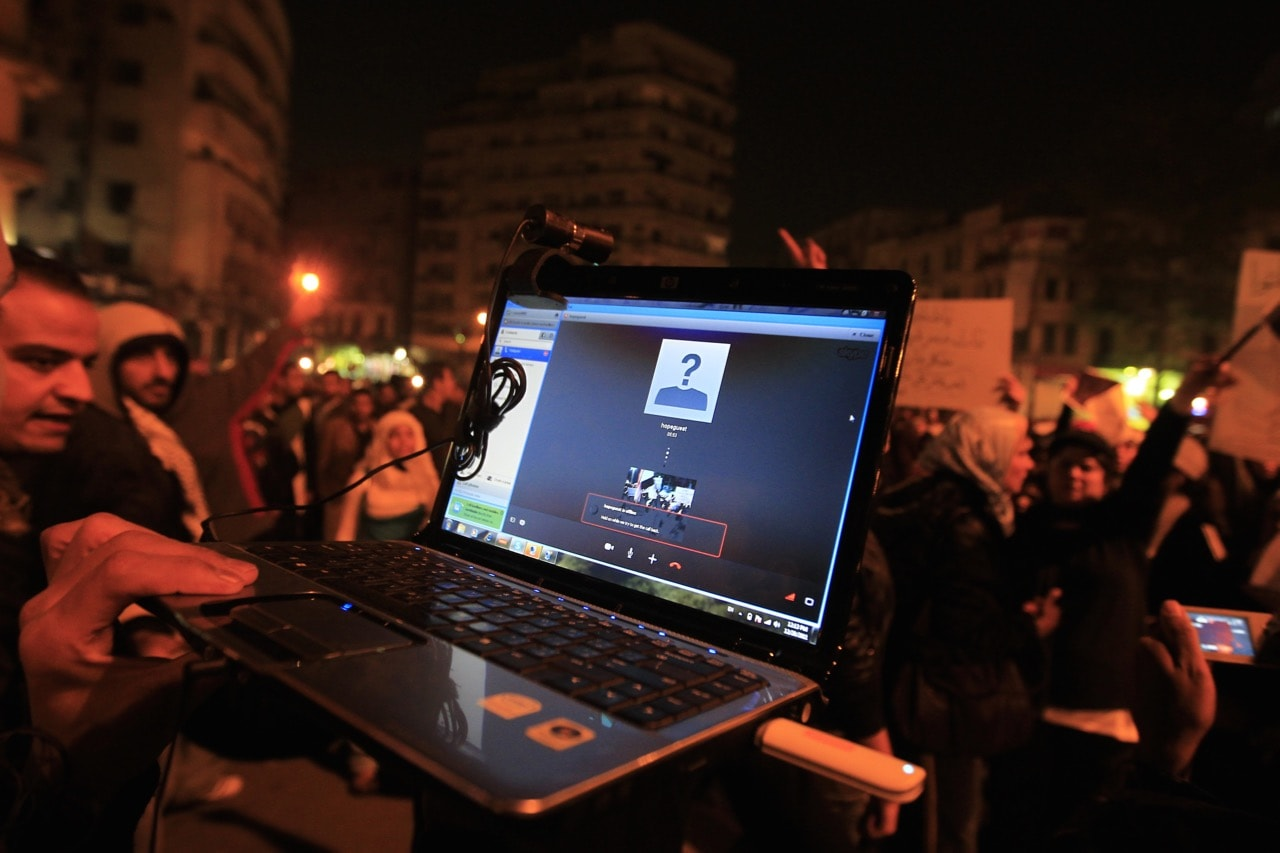
  • From Egypt to the Gulf: How Regional Cybercrime Laws Are Criminalizing Peaceful Dissent

    From Egypt to the Gulf: How Regional Cybercrime Laws Are Criminalizing Peaceful Dissent


    The arbitrary detention of Egyptian journalist Ismail Iskandarani over recent Facebook posts, just two days after President Sisi pardoned six imprisoned activists, exposes Egypt’s harsh political reality: occasional gestures of leniency masks ongoing repression. Iskandarani was  accused of “spreading false news” and “inciting terrorist acts”  even though under Human Rights law this is considered to constitute protected peaceful speech. This represents a broader pattern of intolerance towards independent journalism and online dissent, particularly it highlights the legal loopholes in Egypt’s cybercrime legislation, mirroring similar laws across the Gulf that continue to undermine freedom of expression and Speech.

    Since taking office in 2014, President Sisi has transformed Egypt into one of the most repressive environments for journalism, with over 170 journalists imprisoned and over 500 news websites blocked in the past decade. This suppression of  press freedom follows a wider regional trend across the Gulf, where governments continue to criminalize free speech. Saudi Arabia and the UAE rank 162nd and 164th out of 180, respectively, in the World Press Freedom Index. In Qatar, recent arrests of two online activists who peacefully criticized the government further underscore the region’s tightening grip on digital expression.

    Throughout the MENA region, cybercrime legislation has emerged as a central instrument of digital repression, allowing authorities wide discretion to police online speech. Egypt’s Anti-Cybercrime Law provides authorities with a discretionary power to restrict access to any website deemed a threat to national security. As noted by AFTE, an Egyptian NGO, the term ‘national security’ is so broadly defined that it effectively covers anything related to the stability and security of the nation, the President’s affairs, and the work of its government-affiliated agencies. The law’s extensive scope permits the arbitrary prosecution of almost any political commentary, placing journalists covering government-related matters at constant risk of prosecution.

    Egypt’s cybercrime framework exhibits key flaws that closely resemble those in the Gulf. In fact, according to a Chatham House report most GCC countries have adopted cybercrime laws whose content directly conflicts with international human rights law. Furthermore, the absence of procedural rules for cybercrime prosecutions means that electronic evidence is treated the same as physical evidence, creating a significant gap in the legal system and preventing the proper handling of digital data. These structural weaknesses grant authorities greater control over cybercrime investigations and enable the judiciary to interpret the laws in its favour, opening the door to potential violations of the right to a fair trial.

    For instance, the UAE’s 2021 Combatting Rumours and Cybercrime Law further restricts the legality of peaceful criticism through its provisions. Article 22 criminalizes online sharing of any information or documents that “may harm the State’s interests”, without clearly defining what constitutes a threat to the State or specifying maximum sentences. This legal ambiguity creates the risk of disproportionate punishment, as in the case of human rights activist Ahmed Mansoor, sentenced to ten years of prison for his online activity. 

    Cybercrime legislation across the MENA and GCC region remains harsh and deeply problematic. Its vaguely defined provisions enable authorities to exercise broad discretion and impose arbitrary sentences, placing all peaceful dissenters at risk. Digital Rights 4 Gulf calls on governments across Egypt and the Gulf to stop weaponizing cybercrime laws against their own citizens. As the internet becomes the main platform for activism and public discourse, it is imperative that governments including Egypt and the GCC countries adopt clearer, more narrowly defined laws to ensure the protection of digital rights and freedom of expression. 

  • Remembering Jamal Khashoggi​: Seven Years Later

    Remembering Jamal Khashoggi​: Seven Years Later

    Seven years after the shocking murder of Washington Post journalist Jamal Khashoggi, a Saudi citizen and outspoken critic of the Saudi government, DR4G continues to denounce the absence of justice in his case. We once again call for an independent and impartial investigation into the responsibility of senior Saudi officials, including Crown Prince Mohammed bin Salman; not only for Khashoggi, but for all those targeted through digital surveillance and cross-border repression.

    Khashoggi, a critic of Saudi Arabia’s Crown Prince Mohammed bin Salman (MBS), was murdered inside the Saudi consulate in Istanbul. Despite international outrage and comprehensive UN and US investigations, the main perpetrators have faced seemingly no accountability.​

    The Man Behind the Story: 

    Before his name became synonymous with one of the most shocking political murders of our time, Jamal Khashoggi was a journalist committed to the ideals of a freer and more open Arab world. Since his death, friends and colleagues have recalled his warmth, humility, and unwavering belief in dialogue over division. Though he once advised members of the Saudi elite, he grew increasingly critical of the government’s suppression of dissent and concentration of power. In his final column, published posthumously, he argued that “what the Arab world needs most is free expression,” Though that conviction cost him his life, his words continue to inspire journalists, activists, and citizens who refuse to remain silent in the face of repression 

    Clear evidence of impunity:  

    In June 2019, UN Special Rapporteur Agnes Callamard released a detailed report concluding that Khashoggi’s murder was a “premeditated execution” for which Saudi Arabia was responsible. The report provided credible evidence linking MBS to the crime and called for an international investigation and sanctions against high-level officials. The report emphasized that the operation required substantial human and financial resources, indicating direct involvement and approval at the highest levels of the Saudi state. Callamard also criticized the Saudi trial of suspects, describing it as lacking transparency and not conducted in “good faith”. However, these recommendations continue to be ignored. The Saudi government dismissed the report as biased and unfounded, and to this day refuses to cooperate with international investigators or allow access to key evidence. 

    Additionally, an investigation by US national security agencies in 2021 also found that the crown prince had most likely approved the “capture or kill” operation. That assessment was based on the prince’s control in decision making, the direct involvement of a key adviser and members of Muhammad bin Salman’s protective detail in the operation, and the Crown Prince’s support for using violent measures to silence dissidents abroad, including Khashoggi. These findings concluded that it is highly unlikely that officials would have carried out such an operation without authorization. 

    The Saudi government denied these claims and has labeled them as “biased and unfounded”. To this day, they refuse to cooperate with international investigators or allow access to key evidence. 

    No clear path for Justice: 

    However, the international community has still not committed to taking on a meaningful role for justice. While some countries imposed sanctions on individuals involved in the murder, these measures stopped short of targeting MBS. The United States introduced a resolution called the “Khashoggi Ban,” restricting visas for 76 Saudi individuals believed to be involved in counter-dissident activities, but did not sanction the Crown Prince himself. Similarly, the UK sanctioned 20 Saudi officials but excluded MBS. This lack of decisive action has been criticized by human rights advocates as a failure to uphold international justice.​

    Rather than pursuing real accountability, the Khashoggi case became a political tool. U.S. administrations, both under Trump and Biden, used it for leverage against Riyadh. Even with a CIA assessment pointing to MBS’s direct involvement, the case was quietly dropped. Both presidents publicly promised justice, but neither followed through; choosing political expediency over principle.

    This pattern highlights how Western governments often prioritise economic and strategic interests over human rights. The U.S., in particular, not only helped bury the case but also played a key role in rehabilitating MBS’s image as a “modernising reformer,” effectively allowing the crime to be swept under the rug.

    Despite the continued push for justice, the recommendations have largely been ignored. The Saudi trial resulted in the conviction of lower-level operatives, but key figures including Saud al-Qahtani, a close adviser to MBS,  and The Crown Prince himself faced no legal consequences. 

    A Continued Pattern:

    Khashoggi’s assassination is not an isolated incident but part of a growing trend of journalist and transnational repression. Freedom House has documented 854 incidents of such repression from 38 governments in 91 countries between 2014 and 2022. Authoritarian regimes, including Saudi Arabia, China, and Russia, have increasingly targeted dissidents abroad through surveillance, harassment, and violence.

    In the U.K., Saudi exiles have reported threats and intimidation, including death threats and harassment of family members back home. Despite these reports, British authorities have been criticized for failing to take adequate action, with some activists accusing the government of “turning a blind eye” due to diplomatic and economic ties with Saudi Arabia.

    The Path Forward: 

    As of October 2025, the main perpetrators of Khashoggi’s murder remain unpunished. This acts as a reminder of a dangerous reality: without collective action, authoritarian regimes will continue to weaponize technology to silence dissent beyond their borders. DR4G believes that we must do more to uphold digital rights, protecting press freedom. Thus, implementing the UN’s recommendations, including independent investigations and targeted sanctions, is crucial to deter future violations and uphold the principles of human rights and freedom of expression.​

  • Qatar Amends Cybercrime Law

    Qatar Amends Cybercrime Law

    This month, Qatari officials approved an amendment to the controversial cybercrimes law. The amendment bans the circulation of images or videos of individuals online without their given consent. Officials tout the amendment as a step forward for privacy within the country, but the amendment is rife for abuse and may threaten freedom of expression and journalism within Qatar.

    The punishment for violating the new amendment is one year of prison and/or 100,000 Qatar Riyals (roughly 23,500 Euros). A surface-level analysis of the fine amount may lead one to believe that this amount is tough but fair based on economic measurements such as GDP per capita; where Qataris are amongst the top earners in the world. These economic measures do not tell the full story of the average person in Qatar. The Qatari government heavily subsidizes its nationals through a litany of programs, but most people living in Qatar aren’t Qatari nationals. Rather they are migrant workers. Most estimates say that 90% of the population of Qatar are migrant workers. This means that wealth is not evenly distributed in the country. Furthermore, Qatari officials rarely, if ever, publish data on poverty rates and some estimates suggest that Qatar is an extremely unequal country. Thus wealth is concentrated in the hands of the country’s richest. The 100,000 Qatar Riyal fine is an astronomical amount that most Qataris can’t afford and most of the migrant workers couldn’t fathom paying that much money.

    The new amendment does not only threaten the financial stability of those found to be in violation of the Cybercrime Law, but it also threatens press freedoms within Qatar. The newest amendment, much like the Cybercrime Law overall, is overreaching and vague. Journalists in the country already self-censor their own reports in an effort to stay clear of angering authorities, but the newest amendment makes photojournalism and broadcast journalism almost impossible. Rarely do those who violate the rights of others ever consent to having journalists record them in the act. Thus, photojournalism and broadcast journalism is reduced to a lesser version of itself that is only possible in private, preapproved, and curated places chosen by authorities. 

    These restrictions apply to the average citizen of Qatar too. The vagueness and broad nature of the amendment may make it difficult for Qataris to record abuses by authorities. The ability to record and document police conduct is important. The ability to distribute these events online is important as well. Under the new amendment, this is now impossible. 

    In Qatar’s attempts to protect privacy in public places through the new amendment, authorities may have introduced a new tool of oppression. Journalists now have to be extremely careful in the way they photograph and record any story that takes place in public spaces. Qatari citizens have now lost the only means of documenting abuse by authorities in public spaces. Qatari officials must immediately tighten the language used in both the amendment and the overall Cybercrime law. As it exists now, the law only offers ways for authorities to violate the spirit of the law to punish those who would criticize officials or dissent.


  • Silenced Online: Loujain al-Hathloul and the Weaponization of Cybercrime Laws in Saudi Arabia

    Silenced Online: Loujain al-Hathloul and the Weaponization of Cybercrime Laws in Saudi Arabia

    Loujain al-Hathloul: Digital Dissent, Cybercrime Laws, and the Struggle for Women’s Rights in Saudi Arabia​

    Loujain al-Hathloul, a prominent Saudi women’s rights activist, has become a symbol of resistance against oppressive laws and the misuse of cybercrime legislation in Saudi Arabia. Her activism, particularly her campaign for women’s right to drive and her opposition to the male guardianship system, led to her arrest in May 2018. She was subsequently sentenced to five years and eight months in prison under Saudi Arabia’s counterterrorism and cybercrime laws, with a portion of the sentence suspended.

    Al-Hathloul’s activism began in 2013 when she publicly defied the ban on women driving in Saudi Arabia. Her efforts extended beyond driving; she also campaigned against the male guardianship system, which requires women to obtain permission from a male relative to travel, marry, or work. Her bold actions and use of social media platforms to advocate for women’s rights brought international attention to the systemic gender inequalities in the Kingdom.​

    Arrest and Charges Under Cybercrime Laws

    In May 2018, just weeks before the ban on women driving was lifted, al-Hathloul was arrested along with other activists. She was charged with “spying with foreign parties” and “conspiring against the Kingdom,” accusations that human rights organizations argue were based on vague and broadly defined laws . Her case was transferred to the Specialized Criminal Court, which handles terrorism and national security cases, raising concerns about the criminalization of peaceful activism.​

    Imprisonment and Allegations of Torture

    During her imprisonment, al-Hathloul reported experiencing torture and sexual assault, allegations that were dismissed by the court. Her family stated that she was offered release in exchange for denying these claims, which she refused. To support her rehabilitation, the court suspended part of her sentence, provided she did not commit another offense within the next three years.

    Release and Continued Restrictions

    In February 2021, after serving over one thousand days in prison, al-Hathloul was released. However, her freedom remains restricted; she is under probation, subject to a travel ban, and prohibited from speaking about her detention. Her family called for “real justice” and plans to legally challenge the travel ban imposed on her.

    Cybercrime Laws as Tools of Repression

    Al-Hathloul’s case highlights how cybercrime legislation can be employed to suppress dissenting voices and criminalize online activism. The charges against her included using the internet to disrupt public order, reflecting a broader trend of using cybercrime laws to target activists. This misuse of legislation undermines freedom of expression and the right to peaceful protest.​

    International Response and Ongoing Advocacy

    Al-Hathloul’s case has drawn international attention, with human rights organizations condemning her treatment and the misuse of cybercrime laws to silence activists. Amnesty International and other groups have called for accountability for those responsible for her torture and for all punitive measures against her to be lifted. Her resilience continues to inspire activists worldwide, highlighting the need for legal reforms that protect, rather than punish, digital activism.​

    Concluding Statements: 

    Al-Hathloul’s story is a testament to the courage of individuals who stand up against oppressive systems. Her continued advocacy, despite the risks and restrictions, serves as a powerful source of hope and inspiration for those fighting for human rights and freedom of expression in the digital age.​

    However, her struggles are far from over. The lingering restrictions on her freedom, including the travel ban and probation, are clear reminders of how states can continue to exert control over activists long after their release. Her case illustrates the dangerous broadness of cybercrime laws in Saudi Arabia, which have been weaponized to punish peaceful dissent and silence calls for reform under the pretext of national security and public order.

    Digital Rights 4 Gulf urges the international community to intensify pressure on Saudi authorities to lift all restrictions against Loujain al-Hathloul and to hold those responsible for her mistreatment accountable. We call for urgent reforms to cybercrime laws across the Gulf to ensure they are not used as tools of repression but are aligned with international human rights standards. Protecting digital freedoms is not only about preserving online expression, it is about defending the very right to speak, to challenge, and to demand justice.

  • AI Regulation in Saudi Arabia: Innovation over Human Rights

    AI Regulation in Saudi Arabia: Innovation over Human Rights

    With the global rise of Artificial Intelligence (AI), countries have increasingly adopted regulations to restrict the use of this new technology, exemplified by the AI Act in the European Union. In contrast, Gulf governments have taken a more business-friendly approach to AI regulation, raising concerns about potential breaches of their populations’ privacy rights. Notably, Saudi Arabia has sought to create an attractive environment for data and AI businesses and has so far avoided implementing binding regulations.

    Saudi Arabia has invested heavily in AI as part of its Vision 2030 initiative and plans to integrate various AI technologies into its futuristic city-building project, Neom. These intentions raise significant concerns about potential human rights abuses by the Saudi government involving the use of AI, such as ChatGPT, the artificial intelligence language model making international headlines. These concerns are not limited to AI but extend to the misuse of a broader range of digital technologies. Recent high-profile cases involving Saudi Arabia include the use of digital technologies to spy on dissidents and their families overseas, as well as attempts to infiltrate Twitter to identify government opponents using anonymous accounts. Thus, AI presents yet another opportunity for the Saudi government to infringe on people’s most basic rights to privacy through surveillance and manipulation, exacerbating existing injustices.

    These concerns would be less severe if the Saudi government introduced rules to regulate AI. However, the kingdom has only issued guidelines for AI use, without enforcing any legally binding regulations. This absence of strict regulations means that the Saudi government could potentially violate international human rights laws and standards on privacy without breaching its own laws. Given Saudi Arabia’s tendency to disregard the international right to privacy with its current digital technology, this situation poses significant risks for the future of not only the Saudi population but also any person visiting their future mega city, Neom.

    To address these concerns, it is crucial for the international community to take action. Governments and international organizations should apply pressure on Saudi Arabia to implement comprehensive and binding AI regulations. Such regulations should ensure the protection of human rights and privacy, adhering to international standards. Additionally, countries should collaborate on establishing a global framework for AI governance that promotes ethical use and prevents abuses.

    Furthermore, multinational corporations and AI developers should be encouraged to adopt ethical guidelines and refuse to participate in projects that could lead to human rights violations. By fostering a culture of accountability and ethical responsibility, the international community can mitigate the risks associated with the misuse of AI technologies.

  • Ebtisam Al-Saegh: A Case Study of the Risks Against Women in Bahrain’s Digital Repression

    Ebtisam Al-Saegh: A Case Study of the Risks Against Women in Bahrain’s Digital Repression

    When speaking out for justice becomes dangerous, women like Ebtisam Al-Saegh offer examples of the continuous taument that activists face. A prominent Bahraini human rights and women’s rights activist, Al-Saegh represents the compounded risks female activists face in the digital age, particularly in authoritarian states like Bahrain. Her experience serves as a chilling  example of how regimes deploy advanced digital surveillance tools to suppress dissent while exposing women activists to heightened risks due to both their advocacy and gender.

    Al-Saegh’s unwavering commitment to defending the rights of women and political prisoners in Bahrain has made her a frequent target of state repression. Before her sentencing in May 2017, she was subjected to brutal torture, including sexual assault, at the hands of Bahrain’s National Security Service.

    Although released pending trial, the abuses against her did not stop there. Investigations by Middle East Eye suggest she became a target of Pegasus spyware, a powerful surveillance tool developed by the Israeli NSO Group, allowing Bahraini authorities to infiltrate her phone. This spyware granted access to her private communications, location data, and even live conversations, creating an invasive net around her activities. Reports indicate her iPhone was hacked at least eight times between August and November 2019.

    Al-Saegh described the fear and violation she felt:

    “I now fear the worst and worry that the Bahrain government will be able to exploit my personal documents and family photos.”

    But surveillance was only part of the campaign against her. The spyware attack has led to fear that her personal information could be held against her. The repercussions extended beyond her personal safety, affecting her family, social standing, and mental well-being, further intensifying the psychological toll of such targeted oppression. It is clear that this is a direct act of violence against human rights activists. 

    Al-Saegh’s case is not an isolated one; it reflects a broader pattern of repression against women human rights defenders in Bahrain. Female activists often face gender-based violence, including digital harassment, sexual intimidation, and defamation, all designed to erode their credibility and deter their activism. This creates an additional layer of asymmetry due to the fact that these acts exacerbate pre existing vulnerabilities that women face. These tactics not only suppress their voices but also reinforce societal norms that seek to limit women’s inclusion and participation  in public and political life.

    Her treatment, both in custody and after, exemplifies the compounding impact of authoritarian control and gender-based oppression in Bahrain’s digital landscape. As an outspoken critic of the regime and a woman activist, she represents a dual threat to the state, making her a prime target of both political and gendered repression.

    Americans for Democracy & Human Rights in Bahrain urges the Bahraini government to cease its use of digital repression tools like Pegasus, end the harassment and persecution of women activists, and ensure the protection of fundamental freedoms. The international community must hold the Bahraini government accountable for its systematic violations of human rights, particularly in its efforts to target women who challenge the regime. Ensuring the safety and freedom of expression for women activists is not only a matter of justice but also a crucial step in combating digital authoritarianism in the 21st century.

  • Ahmed Mansoor: The Silenced Voice of UAE’s Pro-Democracy Movement

    Ahmed Mansoor: The Silenced Voice of UAE’s Pro-Democracy Movement

    Blogger and pro-democracy activist Ahmed Mansoor’s ongoing imprisonment in the United Arab Emirates (UAE) underscores the government’s persistent crackdown on free expression and human rights defenders. A recipient of the Martin Ennals Award for his exceptional work, Mansoor remains one of the most prominent activists in the Gulf region.

    On 20 March 2017, Mansoor was arrested for allegedly using social media platforms to “publish false information and rumors” and “promote a sectarian and hate-incited agenda.” Authorities raided his apartment at night, confiscated electronic devices, and detained him in solitary confinement. Since then, he has been denied access to legal counsel and has had minimal contact with his family.

    In May 2018, the State Security Chamber of the Federal Appeal Court in Abu Dhabi sentenced Mansoor to 10 years in prison and fined him 1,000,000 Emirati Dirhams (approximately USD $270,000) on charges including “insulting the UAE and its symbols.”

    Following his arrest, a coalition of 18 human rights organizations called for his release, describing the imprisonment as “a direct attack on the legitimate work of human rights defenders in the UAE.” Despite these efforts, Mansoor remains imprisoned, deprived of his passport, and subject to a travel ban. He continues to face significant risk of torture due to his history as a dissident.

    This is not the first time the UAE government has targeted Mansoor for his human rights work. In 2011, he was charged with publicly insulting state officials on UAE Hewar, an online discussion forum where he had called for democratic elections. After his involvement was discovered, authorities detained him for eight months, during which he was subjected to ill-treatment before being released on a pardon.

    The UAE government has also repeatedly violated Mansoor’s privacy through surveillance and targeted hacking campaigns. Under the guise of Federal Decree-Law No. 5 of 2012 for Combating Cybercrimes, authorities have closely monitored Mansoor and other activists’ online activities. He has been the target of at least three hacking and spyware attacks—the most recent of which could have transformed his iPhone into a monitoring device. This breach of privacy sparked significant global attention, prompting Apple to issue an update to fix vulnerabilities in its operating system.

    The arbitrary imprisonment and persecution of Ahmed Mansoor exemplify the UAE’s broader strategy to systematically suppress free expression and silence dissenting voices. The UAE must immediately release Mansoor and drop all charges related to his peaceful activism. Additionally, it must amend overly broad legislation, such as its cybercrimes laws, to ensure that Emirati citizens and residents are guaranteed their right to free speech.As of January 2025, Mansoor remains imprisoned under harsh conditions, including prolonged solitary confinement, which has raised significant concerns about his health and well-being.

  • An Introduction to The Role of Big Tech in Digital Oppression: Are Companies Complicit?

    An Introduction to The Role of Big Tech in Digital Oppression: Are Companies Complicit?

    In the Gulf region, the relationship between state interests and Big Tech operations has raised significant concerns amongst human rights organisations and activists  about the suppression of independent journalism and the control of dissenting narratives. Particularly during the Arab Spring, social media firms such as Facebook and X (Twitter) have long sought to present themselves as the front-runner of revolutionary movements. Despite this, as Tunisian writer and critic Haythem Guesmi has pointed out, though, it is more appropriate to say they have been vital in the counter-revolutions. In fact, Eight of the top ten largest firms in the world by market capitalization in 2023 are tech corporations, including Apple, Microsoft, Meta, Google, and Amazon (the so-called Big Five). To this end, as distinguished by Mike Hynes, these digital companies are “more powerful than most countries on the planet” because of their immense wealth, global presence, and position in international marketplaces. 

    In the digital sphere, governments have systematically employed surveillance tools, censorship, and legal frameworks to create environments hostile to dissent and journalistic freedom. However, how complicit are Big Tech companies in facilitating these oppressive measures? 

    Surveillance Technologies: 

    Gulf states have made significant investments in advanced surveillance technologies, often sourced from private companies, to monitor and suppress dissent. One of the most notorious tools in this effort that has been frequently mentioned on our website is the Pegasus spyware, developed by the Israeli firm NSO Group. Both Saudi Arabia and the United Arab Emirates have reportedly deployed Pegasus to target activists, journalists, and critics, including the late Saudi journalist Jamal Khashoggi and his family . The developer of the powerful Pegasus spyware was found liable on Friday for its role in the infection of devices belonging to 1,400 WhatsApp users, including journalists, human rights activists, political dissidents, diplomats, and senior foreign government officials further demonstrating the complicity of major tech firms in enabling digital repression. A particularly harrowing example can be seen in a 2022 investigation that revealed how NSO Group’s notorious Pegasus spyware was used to infect the devices of three activists in Bahrain, demonstrating yet again the grave threat which Pegasus poses to critics of repressive governments. 

    Surveillance tools grant authorities access to calls, messages, contacts, and even microphones, making it nearly impossible for journalists and activists to protect their sources. This level of intrusion not only violates fundamental privacy rights but also exposes individuals to severe consequences, including legal prosecution, harassment, arrest, and coordinated defamation campaigns aimed at silencing critical voices. 

    Censorship on Digital Platforms:

    Digital repression is centered around this relationship between governments and these companies. Without these big tech companies selling their products to governments. In recent years Big Tech companies have become a driving force for information dissemination, with political dissemination spreading like wildfire across these platforms. However, there have been reported instances from activists and Human Rights advocates that Big tech companies have worked in tangent with governments to censor and target those who share critical opinions of the Gulf regimes online.

    For example, X has faced significant criticism for its interactions with authoritarian governments. Firstly, governments in the Gulf, notably Saudi Arabia and the UAE, have been reported to  manipulate X’s algorithms and trending topics to suppress opposition voices. Evidence of this has been seen through State-sponsored “troll farms” which have been used to flood the platform with propaganda and disinformation, effectively drowning out genuine activist content. Additionally, the same study highlights that activists have reported X’s compliance with governmental requests to suspend or shadow-ban dissidents, thereby limiting their reach or removing their accounts entirely. In 2019, two former Twitter employees  were convicted of spying for the Saudi government, accessing private data of Saudi dissidents through the platform. This incident further highlights the vulnerability of user data and the potential for internal exploitation within tech companies. From a financial perspective, the Big Tech’s deep ties to Gulf states, such as Saudi Arabia’s investment in Elon Musk’s new AI venture (Xai), which is a subsidiary of X, raise concerns about political influence over content moderation. Ultimately, these companies enable digital repression by complying with censorship demands, failing to protect user data, and allowing state-backed disinformation to thrive.

    The Role of Big Tech and a Call for Transparency

    These practices are deeply concerning as they illustrate how platforms designed to facilitate free expression can be co-opted by authoritarian regimes to monitor, suppress, and punish dissent. Big Tech’s complicity in digital repression is not just passive—it is often an active engagement driven by financial interests, weak data protections, and a lack of accountability. To clarify further, Big Tech becomes a weapon for these regimes by partnering with them or caving in to official demands, influencing international debate and advancing digital authoritarianism. The partnership creates a digital environment where the right to free speech is compromised and the internet turns into a tool for governmental control. Without increased transparency, accountability, and regulatory oversight, the power of Big Tech may continue to strengthen digital authoritarianism efforts, particularly in regions like the Gulf where freedom of expression is already under significant threat. To safeguard freedom of expression, it is imperative for international stakeholders to hold both governments and technology companies accountable, ensuring that digital tools are used to empower rather than oppress.

  • ByeLaws: A Tool for Resistance or Repression in Digital Authoritarian States?

    ByeLaws: A Tool for Resistance or Repression in Digital Authoritarian States?

    While international law establishes foundational principles to combat digital authoritarianism, it is often the local legal frameworks that shape the realities for individuals living under repressive regimes. Authoritarian governments have become adept at exploiting domestic laws to justify digital surveillance, censorship, and control. However, these same systems hold untapped potential as tools for resistance, enabling activists, lawyers, and civil society to push back.

    The Role of ByeLaws in Enabling Digital Repression

    In many countries, authoritarian regimes have weaponized domestic laws to entrench digital control and silence dissent. Cybercrime laws are frequently enacted with vague and overly broad language, criminalising actions like “spreading false news” or “inciting unrest.” As a consequence, these laws enable governments to target journalists, activists, and even citizens for online activity deemed critical of the regime.

    Surveillance laws, in particular, make matters worse by giving authorities unrestricted authority to monitor digital communications. Many regimes mandate tech companies to create backdoor access to user data, facilitating mass surveillance without judicial oversight. Additionally, emergency powers are often invoked to bypass even these minimal safeguards, leading to widespread internet shutdowns and censorship under the guise of maintaining public order. There have been several documented instances during times of political unrest, governments have frequently imposed internet blackouts, cutting off communication channels and stifling the spread of dissenting voices.

    An example of this is in the Gulf region, where governments have repeatedly restricted internet access during periods of political unrest. For instance, in Bahrain, authorities imposed internet blackouts in 2016 in the town of Duraz, following protests against the revocation of a prominent Shia cleric’s citizenship. Reports show that this black out severely limited the ability of activists and journalists to communicate and report on human rights violations. Similarly, during the 2011–2012 protests in Saudi Arabia’s Eastern Province, there were reports of internet disruptions aimed at suppressing dissent. The government also imposed a ban on all protests and marches, warning that security forces would prevent any attempts to disrupt public order. These measures showcase the extent to which local laws can be manipulated to suppress freedoms in the digital age.

    Resistance Through Local Legal Mechanisms

    Despite their misuse, local legal systems also provide avenues for resistance against digital repression. Courts in some countries have emerged as champions of digital rights, with judicial rulings striking down unconstitutional internet shutdowns and privacy violations. These decisions not only protect individuals but also set critical precedents for safeguarding freedoms in the digital realm.

    Data protection laws inspired by international frameworks, such as the EU’s General Data Protection Regulation (GDPR), have also been adopted by some nations and a similar model could be adopted in the Gulf regions in order to protect citizens and their private data. These regulations have the ability to act as a shield against government overreach by limiting unauthorized access to personal information and holding offenders accountable.  Furthermore, strategic litigation is another tool increasingly employed by human rights organizations to challenge repressive laws. By bringing cases to court, these groups force governments to publicly justify their actions, shining a light on abuses and galvanizing public support for reforms. A particular development is this discussion occurred in December 2023, when ALQST, a non-governmental organization focusing on human rights in Saudi Arabia, convened a conference to explore collective strategies for seeking accountability for human rights abuses in the region. The conference emphasized the importance of strategic litigation as a tool to challenge oppressive laws and practices. By bringing cases to court, ALQST and similar organizations aim to expose governmental abuses, foster public awareness, and galvanize support for legal and policy reforms

    Technology as a Catalyst for Resistance

    Technology itself plays a crucial role in enabling resistance against digital authoritarianism. Activists and journalists use digital platforms to document and expose violations, creating a record of abuses that can support legal challenges and advocacy efforts. Furthermore, social media platforms and encrypted messaging apps amplify the voices of those fighting against repression, connecting local movements to global audiences. Thus, growing reliance on technology emphasises the significance of safeguarding these instruments against misuse.

    Building a Path Forward

    To counter the misuse of local laws, governments and civil society must collaborate to reform and strengthen domestic legal systems. The first steps to strengthening reform is through clarity of repressive laws that must be amended to remove vague provisions that criminalize dissent, and judicial independence must be bolstered to ensure fair adjudication of digital rights cases. Additionally, Oversight mechanisms must also be established to monitor and limit surveillance powers, ensuring that these tools are not abused. Public participation is equally critical; by involving civil society in the legislative process, governments can create laws that reflect democratic values and protect fundamental freedoms. Such collaboration fosters transparency and accountability, ensuring that local legal frameworks become instruments of empowerment rather than repression.

    To this end, local laws, though often exploited to entrench digital authoritarianism, remain a vital battleground for defending human rights. By leveraging these systems and strengthening legal protections, the international community and local actors alike can help ensure a freer, more democratic digital future.