Tag: Freedom of Speech

  • Qatar Amends Cybercrime Law

    Qatar Amends Cybercrime Law

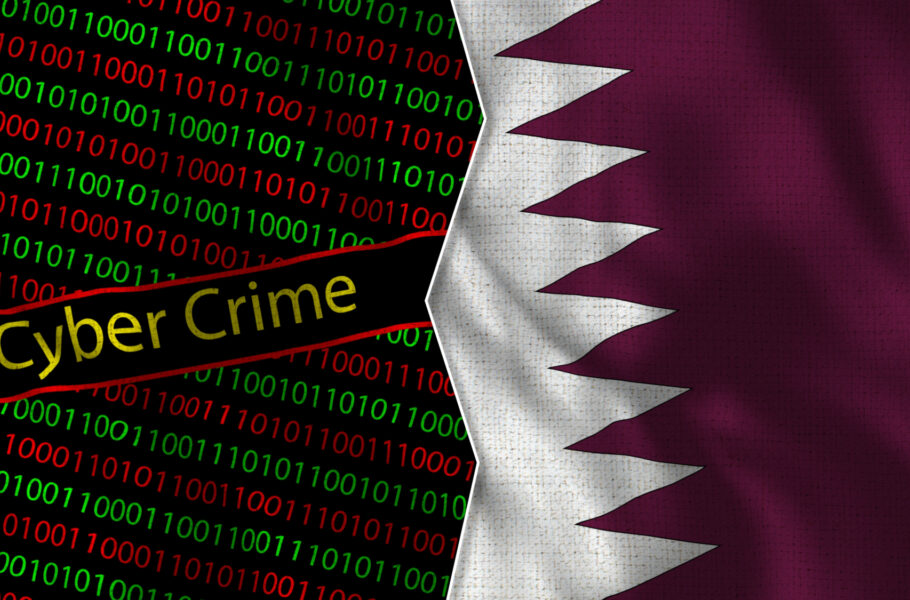
    This month, Qatari officials approved an amendment to the controversial cybercrimes law. The amendment bans the circulation of images or videos of individuals online without their given consent. Officials tout the amendment as a step forward for privacy within the country, but the amendment is rife for abuse and may threaten freedom of expression and journalism within Qatar.

    The punishment for violating the new amendment is one year of prison and/or 100,000 Qatar Riyals (roughly 23,500 Euros). A surface-level analysis of the fine amount may lead one to believe that this amount is tough but fair based on economic measurements such as GDP per capita; where Qataris are amongst the top earners in the world. These economic measures do not tell the full story of the average person in Qatar. The Qatari government heavily subsidizes its nationals through a litany of programs, but most people living in Qatar aren’t Qatari nationals. Rather they are migrant workers. Most estimates say that 90% of the population of Qatar are migrant workers. This means that wealth is not evenly distributed in the country. Furthermore, Qatari officials rarely, if ever, publish data on poverty rates and some estimates suggest that Qatar is an extremely unequal country. Thus wealth is concentrated in the hands of the country’s richest. The 100,000 Qatar Riyal fine is an astronomical amount that most Qataris can’t afford and most of the migrant workers couldn’t fathom paying that much money.

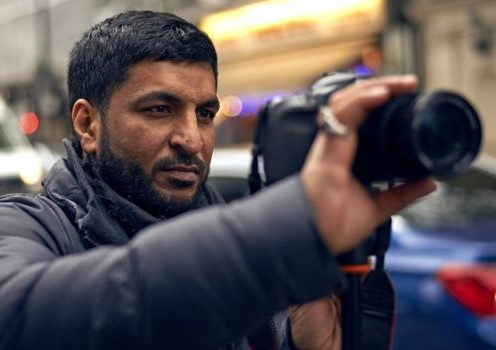
    The new amendment does not only threaten the financial stability of those found to be in violation of the Cybercrime Law, but it also threatens press freedoms within Qatar. The newest amendment, much like the Cybercrime Law overall, is overreaching and vague. Journalists in the country already self-censor their own reports in an effort to stay clear of angering authorities, but the newest amendment makes photojournalism and broadcast journalism almost impossible. Rarely do those who violate the rights of others ever consent to having journalists record them in the act. Thus, photojournalism and broadcast journalism is reduced to a lesser version of itself that is only possible in private, preapproved, and curated places chosen by authorities. 

    These restrictions apply to the average citizen of Qatar too. The vagueness and broad nature of the amendment may make it difficult for Qataris to record abuses by authorities. The ability to record and document police conduct is important. The ability to distribute these events online is important as well. Under the new amendment, this is now impossible. 

    In Qatar’s attempts to protect privacy in public places through the new amendment, authorities may have introduced a new tool of oppression. Journalists now have to be extremely careful in the way they photograph and record any story that takes place in public spaces. Qatari citizens have now lost the only means of documenting abuse by authorities in public spaces. Qatari officials must immediately tighten the language used in both the amendment and the overall Cybercrime law. As it exists now, the law only offers ways for authorities to violate the spirit of the law to punish those who would criticize officials or dissent.

  • An Introduction to The Role of Big Tech in Digital Oppression: Are Companies Complicit?

    An Introduction to The Role of Big Tech in Digital Oppression: Are Companies Complicit?

    In the Gulf region, the relationship between state interests and Big Tech operations has raised significant concerns amongst human rights organisations and activists  about the suppression of independent journalism and the control of dissenting narratives. Particularly during the Arab Spring, social media firms such as Facebook and X (Twitter) have long sought to present themselves as the front-runner of revolutionary movements. Despite this, as Tunisian writer and critic Haythem Guesmi has pointed out, though, it is more appropriate to say they have been vital in the counter-revolutions. In fact, Eight of the top ten largest firms in the world by market capitalization in 2023 are tech corporations, including Apple, Microsoft, Meta, Google, and Amazon (the so-called Big Five). To this end, as distinguished by Mike Hynes, these digital companies are “more powerful than most countries on the planet” because of their immense wealth, global presence, and position in international marketplaces. 

    In the digital sphere, governments have systematically employed surveillance tools, censorship, and legal frameworks to create environments hostile to dissent and journalistic freedom. However, how complicit are Big Tech companies in facilitating these oppressive measures? 

    Surveillance Technologies: 

    Gulf states have made significant investments in advanced surveillance technologies, often sourced from private companies, to monitor and suppress dissent. One of the most notorious tools in this effort that has been frequently mentioned on our website is the Pegasus spyware, developed by the Israeli firm NSO Group. Both Saudi Arabia and the United Arab Emirates have reportedly deployed Pegasus to target activists, journalists, and critics, including the late Saudi journalist Jamal Khashoggi and his family . The developer of the powerful Pegasus spyware was found liable on Friday for its role in the infection of devices belonging to 1,400 WhatsApp users, including journalists, human rights activists, political dissidents, diplomats, and senior foreign government officials further demonstrating the complicity of major tech firms in enabling digital repression. A particularly harrowing example can be seen in a 2022 investigation that revealed how NSO Group’s notorious Pegasus spyware was used to infect the devices of three activists in Bahrain, demonstrating yet again the grave threat which Pegasus poses to critics of repressive governments. 

    Surveillance tools grant authorities access to calls, messages, contacts, and even microphones, making it nearly impossible for journalists and activists to protect their sources. This level of intrusion not only violates fundamental privacy rights but also exposes individuals to severe consequences, including legal prosecution, harassment, arrest, and coordinated defamation campaigns aimed at silencing critical voices. 

    Censorship on Digital Platforms:

    Digital repression is centered around this relationship between governments and these companies. Without these big tech companies selling their products to governments. In recent years Big Tech companies have become a driving force for information dissemination, with political dissemination spreading like wildfire across these platforms. However, there have been reported instances from activists and Human Rights advocates that Big tech companies have worked in tangent with governments to censor and target those who share critical opinions of the Gulf regimes online.

    For example, X has faced significant criticism for its interactions with authoritarian governments. Firstly, governments in the Gulf, notably Saudi Arabia and the UAE, have been reported to  manipulate X’s algorithms and trending topics to suppress opposition voices. Evidence of this has been seen through State-sponsored “troll farms” which have been used to flood the platform with propaganda and disinformation, effectively drowning out genuine activist content. Additionally, the same study highlights that activists have reported X’s compliance with governmental requests to suspend or shadow-ban dissidents, thereby limiting their reach or removing their accounts entirely. In 2019, two former Twitter employees  were convicted of spying for the Saudi government, accessing private data of Saudi dissidents through the platform. This incident further highlights the vulnerability of user data and the potential for internal exploitation within tech companies. From a financial perspective, the Big Tech’s deep ties to Gulf states, such as Saudi Arabia’s investment in Elon Musk’s new AI venture (Xai), which is a subsidiary of X, raise concerns about political influence over content moderation. Ultimately, these companies enable digital repression by complying with censorship demands, failing to protect user data, and allowing state-backed disinformation to thrive.

    The Role of Big Tech and a Call for Transparency

    These practices are deeply concerning as they illustrate how platforms designed to facilitate free expression can be co-opted by authoritarian regimes to monitor, suppress, and punish dissent. Big Tech’s complicity in digital repression is not just passive—it is often an active engagement driven by financial interests, weak data protections, and a lack of accountability. To clarify further, Big Tech becomes a weapon for these regimes by partnering with them or caving in to official demands, influencing international debate and advancing digital authoritarianism. The partnership creates a digital environment where the right to free speech is compromised and the internet turns into a tool for governmental control. Without increased transparency, accountability, and regulatory oversight, the power of Big Tech may continue to strengthen digital authoritarianism efforts, particularly in regions like the Gulf where freedom of expression is already under significant threat. To safeguard freedom of expression, it is imperative for international stakeholders to hold both governments and technology companies accountable, ensuring that digital tools are used to empower rather than oppress.

  • Nabeel Rajab: A Case Study of Digital Repression in Bahrain

    Nabeel Rajab: A Case Study of Digital Repression in Bahrain

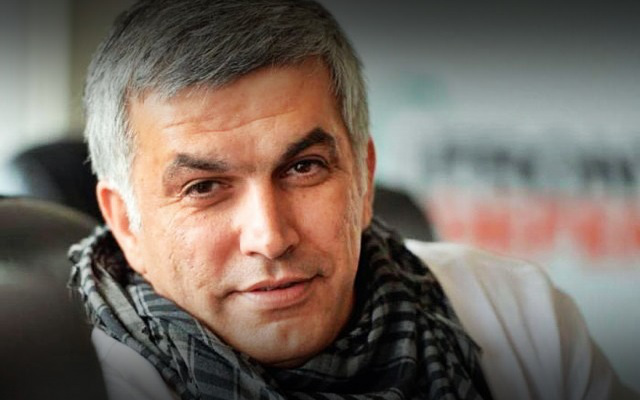
    Nabeel Rajab, one of Bahrain’s most prominent human rights defenders, exemplifies how cyber surveillance is used by the Bahraini government to target and silence activists. His case highlights the ongoing harm inflicted on civilians and activists by the regime. Rajab’s activism has consistently focused on condemning human rights violations both domestically and internationally. His outspoken criticism of the Bahraini government’s involvement in the Yemen conflict and its human rights abuses has made him a prime target for authorities.

    In 2016, Rajab was arrested for tweets criticizing Bahrain’s involvement in the Yemen war and exposing the regime’s abuses. These tweets were dismissed as “false news” and “insults to a foreign country,” resulting in a five-year prison sentence in 2018; clear evidence of the state’s aggressive crackdown on digital dissent. What makes Rajab’s case particularly significant is the government’s use of his social media activity as direct evidence in legal proceedings. In a troubling trend, digital platforms have become tools for the state to monitor, track, and punish critics. Rajab’s tweets, which aimed to spotlight critical issues, were weaponized to justify his conviction and lengthy imprisonment.

    While his release in 2020 marked a positive step toward political freedom in Bahrain, human rights activists still face significant challenges. Released under “alternative sentencing,” Rajab remains under surveillance, and his freedom of movement and speech is heavily restricted. His case is not an isolated one; a growing number of activists in Bahrain face legal persecution and imprisonment for their online activities. The regime’s response to digital dissent is not merely punitive but strategically aimed at deterring others from using digital platforms to criticize the government. The state’s use of surveillance technologies to monitor online speech has created a chilling effect, discouraging free expression and promoting self-censorship among activists and the broader public. These actions undermine basic human rights, including freedom of speech, privacy, and the right to freely exchange ideas.

    Furthermore,  The 2024 Freedom House report ranked Bahrain as “Not Free,” with a score of 12/100, citing severe limitations on civil liberties and political rights. Despite the evidence, the international community’s response has been mixed. Some human rights organizations have called for greater accountability, while tech companies face criticism for enabling digital repression.

    The struggles of activists, however, have not been in vain.  In 2024, King Hamad bin Isa Al Khalifa of Bahrain granted amnesty to more than 800 individuals wrongfully imprisoned for peacefully exercising their right to free speech and political dissent. Nonetheless, political figures and human rights advocates such as Hassan Mushaima, Sheikh Ali Salman, Dr. Abduljalil al-Singace, and Abdulhadi al-Khawaja remain arbitrarily detained. Additionally, the death sentences of 26 individuals on death row have not been commuted by the Bahraini government.

    Rajab’s case highlights the dangers of digital repression, not only for the individuals directly targeted but for the broader landscape of activism and independent journalism in Bahrain. As long as these practices persist, Bahrain’s government will continue to undermine the fundamental rights of its citizens and stifle the voices of those who seek accountability and change.

    DR4G urges the government to take accountability and protect the rights of its citizens. Tech companies must also be held accountable for safeguarding the online spaces they provide, ensuring they are not complicit in the suppression of human rights. Furthermore, governments and international organizations must take decisive action to hold perpetrators of digital violence accountable and protect those who dare to speak truth to power.

  • Digital Threats to Bahraini Journalists: A Systematic Assault on Press Freedom

    Digital Threats to Bahraini Journalists: A Systematic Assault on Press Freedom

    Bahrain’s government has systematically weaponized digital technology to suppress independent journalism and control narratives critical of the regime. Through pervasive surveillance, censorship, and legal harassment, Bahraini authorities have created a hostile environment for journalists, targeting them with spyware and punitive laws to undermine their work and silence dissenting voices.

    Spyware such as Pegasus and FinFisher has been instrumental in this assault. These tools infiltrate journalists’ devices, granting authorities access to their calls, messages, contacts, and microphones. In 2014, FinFisher spyware was deployed to monitor the private communications of Bahraini journalists and activists, exposing them to legal and professional risks. Citizen Lab has further documented the use of Pegasus spyware on at least a dozen Bahraini activists and journalists since 2020. Such invasive surveillance compromises journalists’ ability to protect their sources, deepening systemic repression and exposing them to harassment, arrest, and public defamation.

    Bahraini authorities have systematically discredited and detained journalists to suppress independent reporting. Abduljalil Al-Singace, a human rights defender and blogger, has been imprisoned since 2011, serving a life sentence on charges of “plotting to overthrow the government,” highlighting the regime’s intolerance for investigative and critical journalism. Nabeel Rajab, another prominent journalist and activist, was arrested in 2012 for “insulting a statutory body” on Twitter, and although released in 2020, his case exemplifies the state’s criminalization of online dissent to silence influential voices. Similarly, Ali Mearaj and Hassan Qambar, detained in 2016 and 2018 for reporting on political unrest, remain excluded from recent amnesty efforts, further reflecting the selective and repressive nature of the regime’s policies.

    Bahrain’s legal framework reinforces its control over journalists. The 2014 Cybercrime Law criminalizes vague offenses such as spreading “false news” or “insulting state institutions,” enabling authorities to prosecute journalists arbitrarily. The penal code further punishes perceived offenses against the king or the government’s policies, silencing dissent and censoring online content.

    State-controlled internet providers block websites critical of the regime, and during periods of unrest, authorities impose internet shutdowns to stifle the dissemination of information. These measures ensure that independent journalism and online activism are either suppressed or forced into self-censorship.

    In 2021, the Bahrain Press Association documented 49 media freedom violations, including the arrest, harassment, and surveillance of journalists. These cases illustrate the extent of the government’s efforts to dismantle independent journalism. Journalists are frequently labeled as threats to national security, facing professional ostracization and reputational harm in addition to legal persecution.

    The Bahraini government’s reliance on digital surveillance has exacerbated the challenges faced by journalists. Tools like spyware not only compromise their professional work but also invade their personal lives, creating a pervasive sense of insecurity. The fear of being monitored curtails journalists’ ability to report freely, isolates them from sources, and fosters distrust within journalistic networks. This hyper-surveillance, combined with societal pressures, discourages many from pursuing critical reporting, leading to a chilling effect on press freedom.

    The international community must pressure Bahrain to adhere to its human rights obligations, including commitments to press freedom and privacy protections. As digital tools evolve, it is imperative to establish robust legal frameworks and oversight mechanisms to prevent the misuse of technology against journalists. Safeguarding independent journalism in Bahrain is essential to fostering transparency, accountability, and the fundamental right to freedom of expression. ADHRB calls for urgent reforms:

    • End the use of spyware to monitor journalists and uphold their right to privacy.
    • Amend vague and repressive laws, including the 2014 Cybercrime Law, to protect freedom of expression.
    • Release journalists and activists imprisoned for their work and opinions.
    • Establish safeguards to prevent surveillance and ensure the safety of journalists and their sources.

  • A Community Under Watch: The targeting of women activists using Pegasus Spyware in Bahrain

    A Community Under Watch: The targeting of women activists using Pegasus Spyware in Bahrain

    Bahrain’s government has increasingly weaponized digital technology to suppress dissent and maintain its authoritarian control. Through pervasive surveillance, online censorship, and targeted monitoring, authorities stifle freedom of expression and political mobilization, particularly targeting women activists. Reports from organizations such as Amnesty International and Citizen Lab reveal that Pegasus spyware, developed by the NSO Group, has been deployed against women human rights defenders, exposing a troubling pattern of gendered digital repression.

    Pegasus spyware infiltrates mobile devices, granting access to calls, messages, contacts, and even microphones. Activists targeted by this spyware face profound violations of privacy and heightened risks to their safety. For instance, Bahraini human rights activist Ebtisam Al-Saegh reportedly experienced harassment after her phone was infected with Pegasus, allowing authorities to monitor her private communications and isolate her from support networks. Such surveillance deepens systemic challenges, exposing women to social ostracization, legal threats, and reputational harm in conservative societies. In this particular case, Ebtisam Al-Saegh  was wrongfully charged with terrorism under “using human rights work as a cover to communicate and cooperate with Al Karama Foundation to provide them with information and fake news about the situation in Bahrain to undermine its status abroad” after speaking out about the atrocities committed against her and other Bharani women. 

    Such instances highlight the risk of surveillance and its harmful effects, potentially discouraging women and other activists from engaging in political advocacy or organizing protests. This hyper-surveillance fosters distrust within activist networks, eroding the solidarity necessary for effective collective action. Women often bear additional societal pressures, as breaches of their private data can lead to severe public shaming, perpetuating cultural norms that suppress their participation in public and political life.

    The psychological impact of constant monitoring is equally as unkind. Activists perceive a persistent sense of unease and loss of autonomy, as the fear of penalties prevents them from freely expressing themselves or engaging in open discourse. Women, in particular, face unique challenges due to their central roles in family communication networks. Surveillance not only compromises their activism but also endangers their loved ones, forcing many to withdraw from advocacy efforts to shield their families from harm.

    In this respect, Bahrain’s surveillance regime exemplifies how technology is wielded to deepen existing gender inequalities and silence marginalized voices. For women activists, the digital repression compounds societal constraints, isolating them from their communities and restricting their ability to participate in movements for justice and equality.

    Countering such abuses requires robust international pressure and grassroots resilience. ADHRB Americans for Democracy & Human Rights in Bahrain call  on the Bahraini government to end its digital authoritarian practices and uphold its human rights obligations. This includes amending vague cybercrime laws that criminalize dissent, releasing individuals imprisoned for expressing their opinions, and ensuring the protection of privacy and freedom of expression for all citizens. As digital tools evolve, safeguarding civil liberties, especially for vulnerable groups, must remain a priority in the fight against authoritarianism.

  • Cyber Surveillance in Bahrain: The New Tool of Repression Against Activists 

    Cyber Surveillance in Bahrain: The New Tool of Repression Against Activists 

    Human Rights Watch and independent security researchers have reported that Bahrain’s government leverages digital technology to monitor and restrict citizens, especially activists, in ways that closely resemble its strict control over public spaces. While no direct evidence shows continuous surveillance, corporate leaks and research reveal that Bahrain has sought intrusive software, largely from Western firms, that could potentially infringe on citizens’ privacy rights. Alongside this investigative journalism, the Human Rights Watch has documented accounts from activists, detailing a pattern of digital surveillance and control aimed at silencing dissent.

    A key tool of concern about Bahrain’s tyranny is the mandate of apps such as; BeAware Bahrain, which integrates tracking features. Initially deployed for contact tracing during the COVID pandemic, this app monitors users in real-time, gathering extensive location and health data, which raises privacy concerns given mandatory ID registration. According to Amnesty International, BeAware Bahrain was even connected to a public TV show that randomly verified quarantine compliance, intensifying government scrutiny. This gave the authorities additional leverage to monitor individuals without their explicit consent, expanding the scope of surveillance beyond health measures into broader political and social control.

    This connection to public television and other surveillance mechanisms signaled a troubling overlap between public health initiatives and authoritarian control. The TV show, which was an unconventional method of verifying compliance, heightened concerns from international advocates about state overreach. It also led to fears among activists and opposition members that their movements could be tracked, potentially leading to arbitrary detentions or reprisals for political dissent.

    Digital authoritarianism in Bahrain goes beyond surveillance and censorship; it extends into the lives of individuals in nearly every aspect. Although there are no direct cases that link the unjust arrests of activists to these softwares, activists are increasingly aware that any internet comment, tweet, or post might be  heavily scrutinized and used against them. The psychological toll on activists is immense. The knowledge that every digital move could be tracked leads to a pervasive sense of insecurity. In interviews with The Guardian, activists have explained how their awareness of being surveilled has stifled their ability to organize protests, advocate for reforms, or even criticize the government openly online. This creates a vacuum that both inhibits the capacity to mobilize for change as well as political discourse. According to The Human Rights Watch, citizens are less inclined to plan rallies, push for reform, or call attention to injustices if they are scared to voice their grievances both online and offline. However, for those who dare to challenge the regime, the consequences are often severe and are often  detained, interrogated, and even tortured in custody. And for many activists, this risk has become too high, allowing the government to continue to violate human rights, whilst avoiding accountability.