Tag: Blog

  • Ahmed Mansoor: The Silenced Voice of UAE’s Pro-Democracy Movement

    Ahmed Mansoor: The Silenced Voice of UAE’s Pro-Democracy Movement

    Blogger and pro-democracy activist Ahmed Mansoor’s ongoing imprisonment in the United Arab Emirates (UAE) underscores the government’s persistent crackdown on free expression and human rights defenders. A recipient of the Martin Ennals Award for his exceptional work, Mansoor remains one of the most prominent activists in the Gulf region.

    On 20 March 2017, Mansoor was arrested for allegedly using social media platforms to “publish false information and rumors” and “promote a sectarian and hate-incited agenda.” Authorities raided his apartment at night, confiscated electronic devices, and detained him in solitary confinement. Since then, he has been denied access to legal counsel and has had minimal contact with his family.

    In May 2018, the State Security Chamber of the Federal Appeal Court in Abu Dhabi sentenced Mansoor to 10 years in prison and fined him 1,000,000 Emirati Dirhams (approximately USD $270,000) on charges including “insulting the UAE and its symbols.”

    Following his arrest, a coalition of 18 human rights organizations called for his release, describing the imprisonment as “a direct attack on the legitimate work of human rights defenders in the UAE.” Despite these efforts, Mansoor remains imprisoned, deprived of his passport, and subject to a travel ban. He continues to face significant risk of torture due to his history as a dissident.

    This is not the first time the UAE government has targeted Mansoor for his human rights work. In 2011, he was charged with publicly insulting state officials on UAE Hewar, an online discussion forum where he had called for democratic elections. After his involvement was discovered, authorities detained him for eight months, during which he was subjected to ill-treatment before being released on a pardon.

    The UAE government has also repeatedly violated Mansoor’s privacy through surveillance and targeted hacking campaigns. Under the guise of Federal Decree-Law No. 5 of 2012 for Combating Cybercrimes, authorities have closely monitored Mansoor and other activists’ online activities. He has been the target of at least three hacking and spyware attacks—the most recent of which could have transformed his iPhone into a monitoring device. This breach of privacy sparked significant global attention, prompting Apple to issue an update to fix vulnerabilities in its operating system.

    The arbitrary imprisonment and persecution of Ahmed Mansoor exemplify the UAE’s broader strategy to systematically suppress free expression and silence dissenting voices. The UAE must immediately release Mansoor and drop all charges related to his peaceful activism. Additionally, it must amend overly broad legislation, such as its cybercrimes laws, to ensure that Emirati citizens and residents are guaranteed their right to free speech.As of January 2025, Mansoor remains imprisoned under harsh conditions, including prolonged solitary confinement, which has raised significant concerns about his health and well-being.

  • An Introduction to The Role of Big Tech in Digital Oppression: Are Companies Complicit?

    An Introduction to The Role of Big Tech in Digital Oppression: Are Companies Complicit?

    In the Gulf region, the relationship between state interests and Big Tech operations has raised significant concerns amongst human rights organisations and activists  about the suppression of independent journalism and the control of dissenting narratives. Particularly during the Arab Spring, social media firms such as Facebook and X (Twitter) have long sought to present themselves as the front-runner of revolutionary movements. Despite this, as Tunisian writer and critic Haythem Guesmi has pointed out, though, it is more appropriate to say they have been vital in the counter-revolutions. In fact, Eight of the top ten largest firms in the world by market capitalization in 2023 are tech corporations, including Apple, Microsoft, Meta, Google, and Amazon (the so-called Big Five). To this end, as distinguished by Mike Hynes, these digital companies are “more powerful than most countries on the planet” because of their immense wealth, global presence, and position in international marketplaces. 

    In the digital sphere, governments have systematically employed surveillance tools, censorship, and legal frameworks to create environments hostile to dissent and journalistic freedom. However, how complicit are Big Tech companies in facilitating these oppressive measures? 

    Surveillance Technologies: 

    Gulf states have made significant investments in advanced surveillance technologies, often sourced from private companies, to monitor and suppress dissent. One of the most notorious tools in this effort that has been frequently mentioned on our website is the Pegasus spyware, developed by the Israeli firm NSO Group. Both Saudi Arabia and the United Arab Emirates have reportedly deployed Pegasus to target activists, journalists, and critics, including the late Saudi journalist Jamal Khashoggi and his family . The developer of the powerful Pegasus spyware was found liable on Friday for its role in the infection of devices belonging to 1,400 WhatsApp users, including journalists, human rights activists, political dissidents, diplomats, and senior foreign government officials further demonstrating the complicity of major tech firms in enabling digital repression. A particularly harrowing example can be seen in a 2022 investigation that revealed how NSO Group’s notorious Pegasus spyware was used to infect the devices of three activists in Bahrain, demonstrating yet again the grave threat which Pegasus poses to critics of repressive governments. 

    Surveillance tools grant authorities access to calls, messages, contacts, and even microphones, making it nearly impossible for journalists and activists to protect their sources. This level of intrusion not only violates fundamental privacy rights but also exposes individuals to severe consequences, including legal prosecution, harassment, arrest, and coordinated defamation campaigns aimed at silencing critical voices. 

    Censorship on Digital Platforms:

    Digital repression is centered around this relationship between governments and these companies. Without these big tech companies selling their products to governments. In recent years Big Tech companies have become a driving force for information dissemination, with political dissemination spreading like wildfire across these platforms. However, there have been reported instances from activists and Human Rights advocates that Big tech companies have worked in tangent with governments to censor and target those who share critical opinions of the Gulf regimes online.

    For example, X has faced significant criticism for its interactions with authoritarian governments. Firstly, governments in the Gulf, notably Saudi Arabia and the UAE, have been reported to  manipulate X’s algorithms and trending topics to suppress opposition voices. Evidence of this has been seen through State-sponsored “troll farms” which have been used to flood the platform with propaganda and disinformation, effectively drowning out genuine activist content. Additionally, the same study highlights that activists have reported X’s compliance with governmental requests to suspend or shadow-ban dissidents, thereby limiting their reach or removing their accounts entirely. In 2019, two former Twitter employees  were convicted of spying for the Saudi government, accessing private data of Saudi dissidents through the platform. This incident further highlights the vulnerability of user data and the potential for internal exploitation within tech companies. From a financial perspective, the Big Tech’s deep ties to Gulf states, such as Saudi Arabia’s investment in Elon Musk’s new AI venture (Xai), which is a subsidiary of X, raise concerns about political influence over content moderation. Ultimately, these companies enable digital repression by complying with censorship demands, failing to protect user data, and allowing state-backed disinformation to thrive.

    The Role of Big Tech and a Call for Transparency

    These practices are deeply concerning as they illustrate how platforms designed to facilitate free expression can be co-opted by authoritarian regimes to monitor, suppress, and punish dissent. Big Tech’s complicity in digital repression is not just passive—it is often an active engagement driven by financial interests, weak data protections, and a lack of accountability. To clarify further, Big Tech becomes a weapon for these regimes by partnering with them or caving in to official demands, influencing international debate and advancing digital authoritarianism. The partnership creates a digital environment where the right to free speech is compromised and the internet turns into a tool for governmental control. Without increased transparency, accountability, and regulatory oversight, the power of Big Tech may continue to strengthen digital authoritarianism efforts, particularly in regions like the Gulf where freedom of expression is already under significant threat. To safeguard freedom of expression, it is imperative for international stakeholders to hold both governments and technology companies accountable, ensuring that digital tools are used to empower rather than oppress.

  • ByeLaws: A Tool for Resistance or Repression in Digital Authoritarian States?

    ByeLaws: A Tool for Resistance or Repression in Digital Authoritarian States?

    While international law establishes foundational principles to combat digital authoritarianism, it is often the local legal frameworks that shape the realities for individuals living under repressive regimes. Authoritarian governments have become adept at exploiting domestic laws to justify digital surveillance, censorship, and control. However, these same systems hold untapped potential as tools for resistance, enabling activists, lawyers, and civil society to push back.

    The Role of ByeLaws in Enabling Digital Repression

    In many countries, authoritarian regimes have weaponized domestic laws to entrench digital control and silence dissent. Cybercrime laws are frequently enacted with vague and overly broad language, criminalising actions like “spreading false news” or “inciting unrest.” As a consequence, these laws enable governments to target journalists, activists, and even citizens for online activity deemed critical of the regime.

    Surveillance laws, in particular, make matters worse by giving authorities unrestricted authority to monitor digital communications. Many regimes mandate tech companies to create backdoor access to user data, facilitating mass surveillance without judicial oversight. Additionally, emergency powers are often invoked to bypass even these minimal safeguards, leading to widespread internet shutdowns and censorship under the guise of maintaining public order. There have been several documented instances during times of political unrest, governments have frequently imposed internet blackouts, cutting off communication channels and stifling the spread of dissenting voices.

    An example of this is in the Gulf region, where governments have repeatedly restricted internet access during periods of political unrest. For instance, in Bahrain, authorities imposed internet blackouts in 2016 in the town of Duraz, following protests against the revocation of a prominent Shia cleric’s citizenship. Reports show that this black out severely limited the ability of activists and journalists to communicate and report on human rights violations. Similarly, during the 2011–2012 protests in Saudi Arabia’s Eastern Province, there were reports of internet disruptions aimed at suppressing dissent. The government also imposed a ban on all protests and marches, warning that security forces would prevent any attempts to disrupt public order. These measures showcase the extent to which local laws can be manipulated to suppress freedoms in the digital age.

    Resistance Through Local Legal Mechanisms

    Despite their misuse, local legal systems also provide avenues for resistance against digital repression. Courts in some countries have emerged as champions of digital rights, with judicial rulings striking down unconstitutional internet shutdowns and privacy violations. These decisions not only protect individuals but also set critical precedents for safeguarding freedoms in the digital realm.

    Data protection laws inspired by international frameworks, such as the EU’s General Data Protection Regulation (GDPR), have also been adopted by some nations and a similar model could be adopted in the Gulf regions in order to protect citizens and their private data. These regulations have the ability to act as a shield against government overreach by limiting unauthorized access to personal information and holding offenders accountable.  Furthermore, strategic litigation is another tool increasingly employed by human rights organizations to challenge repressive laws. By bringing cases to court, these groups force governments to publicly justify their actions, shining a light on abuses and galvanizing public support for reforms. A particular development is this discussion occurred in December 2023, when ALQST, a non-governmental organization focusing on human rights in Saudi Arabia, convened a conference to explore collective strategies for seeking accountability for human rights abuses in the region. The conference emphasized the importance of strategic litigation as a tool to challenge oppressive laws and practices. By bringing cases to court, ALQST and similar organizations aim to expose governmental abuses, foster public awareness, and galvanize support for legal and policy reforms

    Technology as a Catalyst for Resistance

    Technology itself plays a crucial role in enabling resistance against digital authoritarianism. Activists and journalists use digital platforms to document and expose violations, creating a record of abuses that can support legal challenges and advocacy efforts. Furthermore, social media platforms and encrypted messaging apps amplify the voices of those fighting against repression, connecting local movements to global audiences. Thus, growing reliance on technology emphasises the significance of safeguarding these instruments against misuse.

    Building a Path Forward

    To counter the misuse of local laws, governments and civil society must collaborate to reform and strengthen domestic legal systems. The first steps to strengthening reform is through clarity of repressive laws that must be amended to remove vague provisions that criminalize dissent, and judicial independence must be bolstered to ensure fair adjudication of digital rights cases. Additionally, Oversight mechanisms must also be established to monitor and limit surveillance powers, ensuring that these tools are not abused. Public participation is equally critical; by involving civil society in the legislative process, governments can create laws that reflect democratic values and protect fundamental freedoms. Such collaboration fosters transparency and accountability, ensuring that local legal frameworks become instruments of empowerment rather than repression.

    To this end, local laws, though often exploited to entrench digital authoritarianism, remain a vital battleground for defending human rights. By leveraging these systems and strengthening legal protections, the international community and local actors alike can help ensure a freer, more democratic digital future.

  • The Struggle Against Digital Authoritarianism: International Law Under Pressure

    The Struggle Against Digital Authoritarianism: International Law Under Pressure

    Digital authoritarianism has become a powerful tool for repressive regimes, weaponizing technology to suppress dissent, surveil citizens, and manipulate public discourse. While international legal frameworks exist to protect fundamental freedoms, they remain insufficient against the rapid evolution of digital repression. States exploit surveillance tools, censorship mechanisms, and cyber tactics to entrench control, exposing the inadequacies of global legal safeguards.

    International agreements enshrine rights frequently undermined by digital authoritarianism. The Universal Declaration of Human Rights (UDHR) affirms freedom of expression and access to information under Article 19,  yet regimes routinely impose internet shutdowns, block critical websites, and deploy state-sponsored disinformation to distort narratives. Similarly, the International Covenant on Civil and Political Rights (ICCPR) guarantees the right to privacy under Article 17, a protection rendered hollow by invasive spyware and mass surveillance masquerading as national security measures. While the Budapest Convention on Cybercrime  provides a foundation for countering cyber threats, it lacks the provisions necessary to confront state-backed digital repression, allowing governments to operate with impunity.

    In conflict zones, digital authoritarianism escalates instability and exacerbates human rights abuses. Governments and armed actors disregard International Humanitarian Law (IHL) principles such as distinction and proportionality, deploying mass surveillance and cyber offensives against activists, journalists, and civilians. Such tactics silence dissent, erode trust, and deepen societal divisions, using digital tools as instruments of coercion and fear.

    As seen within these examples, despite the existence of these international frameworks there are  significant challenges hindering their enforcement. One major issue is the global nature of digital technologies. Surveillance and cyberattacks often transcend national borders, complicating jurisdictional accountability. Secondly, private companies  supplying spyware and other surveillance tools operate with minimal oversight, enabling authoritarian practices. Finally, multilateral institutions lack robust enforcement mechanisms, making it difficult to hold states or private actors accountable for their role in digital oppression.

    To address these challenges, the international community must modernize legal frameworks to confront state-backed digital repression. In particular, strengthening the Budapest Convention to include specific provisions for addressing these issues is crucial. Additionally, stricter oversight of private entities involved in the surveillance industry is essential to ensure accountability. Multilateral institutions must also enhance their enforcement capabilities, enabling swift and effective responses to violations of digital rights.Without decisive reform, digital authoritarianism will continue to erode democratic values, human rights, and global stability. International law must adapt to the realities of the digital age, ensuring technology is used to empower people rather than oppress them. By safeguarding fundamental freedoms in the digital realm, the international community can reaffirm its commitment to justice, transparency, and accountability.

  • Silencing Dissent: The Case of Loujain Al Hathloul and Digital Violence in Saudi Arabia

    Silencing Dissent: The Case of Loujain Al Hathloul and Digital Violence in Saudi Arabia

    In the realm of human rights advocacy, few cases resonate as loudly as that of Loujain Al Hathloul, a leading women’s rights advocate from Saudi Arabia. Her story serves as a major instance of the widespread phenomenon of digital violence against women in the kingdom. Despite her brave efforts to challenge societal norms, Al Hathloul became a target of online abuse, highlighting the alarming use of digital platforms to suppress dissent and silence women’s voices, with the outcome of exacerbating the gender digital divide. In 2014, she defied the ban on women driving by attempting to cross the border from the United Arab Emirates into Saudi Arabia with her car, a courageous act that led to her arrest and imprisonment for 73 days. However, Al Hathloul’s activism did not end with her release. Instead, she continued to speak out against the injustices faced by women in Saudi Arabia, leveraging social media as a powerful tool for advocacy.

    One of the most insidious tactics employed against Al Hathloul was the use of digital violence. In her case, it manifested in the form of hacking her social media accounts, spreading false information about her online, and even impersonating her family members to undermine her credibility. The challenges faced by Loujain Al Hathloul resonate with those encountered by other women activists in Saudi Arabia, including Samar Badawi and Nassima Al-Sada. Samar Badawi, human rights defender, has long provoked Saudi authorities with her advocacy for women’s rights and political prisoners. Her 2018 arrest sparked global outrage and subjected her to digital harassment and defamation campaigns, aimed at discrediting her and diminishing her activism. Similarly, Nassima Al-Sada has faced relentless persecution for her advocacy efforts for women’s rights. Arrested in 2018 for her peaceful work, including campaigning against the male guardianship system, Al-Sada, like Al Hathloul and Badawi, has been subjected to digital violence, including hacking attempts and online harassment, in an effort to silence her and dissuade others from joining her cause.

    The intent behind digital violence against women’s right defenders is clear: to intimidate, discredit, and ultimately silence individuals who dare to speak out against the status quo. Attacks can manifest in various forms, including defamation campaigns, identity theft, and the creation of fraudulent accounts using women’s personal information. For instance, the Gulf Centre for Human Rights expressed alarm in an October 2019 statement regarding the use of “deepfake” technology targeting women human rights advocates through the manipulation of images, audio, video, and text, posing a serious threat to their safety. In the Arab States, nearly half of the women who suffered online violence in 2021 said to have experienced it at least once in their life, while the other half has been a victim of online harassment more than once. It is not a coincidence that Arab States have one of the widest gender divides as reported by the International Telecommunication Union in 2021, with 56% of women having online access compared to 68% of men. Digital violence exacerbates this gap by further marginalizing women in online spaces. When women are subjected to harassment, intimidation, and defamation online, it not only silences their voices but also creates a hostile environment that discourages their participation. Fear of online abuse can lead women to self-censor or withdraw from digital platforms altogether, limiting their access to information, resources and opportunities for skill development.

    By targeting Al Hathloul’s online exposure, the Saudi authorities sought to not only undermine her activism but also to send a warning message to others who might consider following in her footsteps. Authoritarian regimes primarily use restrictions on information dissemination to mitigate possible harm when faced with novel and unexpected challenges to the system and its core values. The most efficient tool at the disposal of authoritarian governments to prevent the spread of undesirable information is control over the media through a large market share of state-owned outlets that restricts access for independent media and suppresses social minorities’ voices. In this case, the reach of these attacks extended even beyond the borders of Saudi Arabia, reaching a global audience and implicating not just the Saudi government but also the tech companies that inadvertently facilitated these abuses.

    Al Hathloul’s case, much like Badawi’s and Al-Sada’s and many other women’s rights activists, serves to highlight the urgent need for greater protections against digital violence. Tech companies must be held accountable for safeguarding the online spaces they provide, ensuring that they are not complicit in the suppression of human rights. Moreover, governments and international organizations must take decisive action to hold perpetrators of digital violence accountable and ensure that those who dare to speak truth to power are protected from harm. Al Hathloul’s commitment to justice and equality is a powerful reminder of the importance of standing firm against digital violence and advancing human rights for all, both online and offline.

    Originally posted at ECDHR

  • Nabeel Rajab: A Case Study of Digital Repression in Bahrain

    Nabeel Rajab: A Case Study of Digital Repression in Bahrain

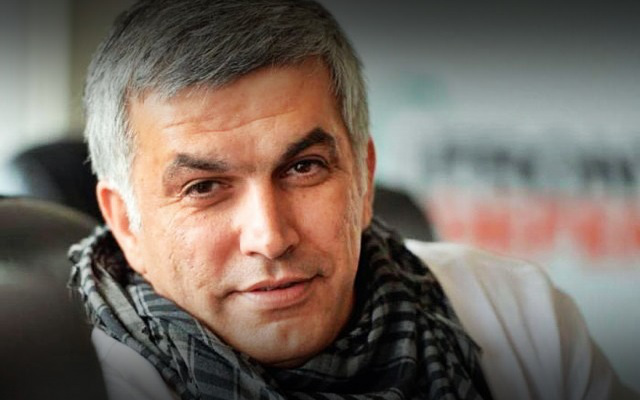
    Nabeel Rajab, one of Bahrain’s most prominent human rights defenders, exemplifies how cyber surveillance is used by the Bahraini government to target and silence activists. His case highlights the ongoing harm inflicted on civilians and activists by the regime. Rajab’s activism has consistently focused on condemning human rights violations both domestically and internationally. His outspoken criticism of the Bahraini government’s involvement in the Yemen conflict and its human rights abuses has made him a prime target for authorities.

    In 2016, Rajab was arrested for tweets criticizing Bahrain’s involvement in the Yemen war and exposing the regime’s abuses. These tweets were dismissed as “false news” and “insults to a foreign country,” resulting in a five-year prison sentence in 2018; clear evidence of the state’s aggressive crackdown on digital dissent. What makes Rajab’s case particularly significant is the government’s use of his social media activity as direct evidence in legal proceedings. In a troubling trend, digital platforms have become tools for the state to monitor, track, and punish critics. Rajab’s tweets, which aimed to spotlight critical issues, were weaponized to justify his conviction and lengthy imprisonment.

    While his release in 2020 marked a positive step toward political freedom in Bahrain, human rights activists still face significant challenges. Released under “alternative sentencing,” Rajab remains under surveillance, and his freedom of movement and speech is heavily restricted. His case is not an isolated one; a growing number of activists in Bahrain face legal persecution and imprisonment for their online activities. The regime’s response to digital dissent is not merely punitive but strategically aimed at deterring others from using digital platforms to criticize the government. The state’s use of surveillance technologies to monitor online speech has created a chilling effect, discouraging free expression and promoting self-censorship among activists and the broader public. These actions undermine basic human rights, including freedom of speech, privacy, and the right to freely exchange ideas.

    Furthermore,  The 2024 Freedom House report ranked Bahrain as “Not Free,” with a score of 12/100, citing severe limitations on civil liberties and political rights. Despite the evidence, the international community’s response has been mixed. Some human rights organizations have called for greater accountability, while tech companies face criticism for enabling digital repression.

    The struggles of activists, however, have not been in vain.  In 2024, King Hamad bin Isa Al Khalifa of Bahrain granted amnesty to more than 800 individuals wrongfully imprisoned for peacefully exercising their right to free speech and political dissent. Nonetheless, political figures and human rights advocates such as Hassan Mushaima, Sheikh Ali Salman, Dr. Abduljalil al-Singace, and Abdulhadi al-Khawaja remain arbitrarily detained. Additionally, the death sentences of 26 individuals on death row have not been commuted by the Bahraini government.

    Rajab’s case highlights the dangers of digital repression, not only for the individuals directly targeted but for the broader landscape of activism and independent journalism in Bahrain. As long as these practices persist, Bahrain’s government will continue to undermine the fundamental rights of its citizens and stifle the voices of those who seek accountability and change.

    DR4G urges the government to take accountability and protect the rights of its citizens. Tech companies must also be held accountable for safeguarding the online spaces they provide, ensuring they are not complicit in the suppression of human rights. Furthermore, governments and international organizations must take decisive action to hold perpetrators of digital violence accountable and protect those who dare to speak truth to power.

  • Digital Threats to Bahraini Journalists: A Systematic Assault on Press Freedom

    Digital Threats to Bahraini Journalists: A Systematic Assault on Press Freedom

    Bahrain’s government has systematically weaponized digital technology to suppress independent journalism and control narratives critical of the regime. Through pervasive surveillance, censorship, and legal harassment, Bahraini authorities have created a hostile environment for journalists, targeting them with spyware and punitive laws to undermine their work and silence dissenting voices.

    Spyware such as Pegasus and FinFisher has been instrumental in this assault. These tools infiltrate journalists’ devices, granting authorities access to their calls, messages, contacts, and microphones. In 2014, FinFisher spyware was deployed to monitor the private communications of Bahraini journalists and activists, exposing them to legal and professional risks. Citizen Lab has further documented the use of Pegasus spyware on at least a dozen Bahraini activists and journalists since 2020. Such invasive surveillance compromises journalists’ ability to protect their sources, deepening systemic repression and exposing them to harassment, arrest, and public defamation.

    Bahraini authorities have systematically discredited and detained journalists to suppress independent reporting. Abduljalil Al-Singace, a human rights defender and blogger, has been imprisoned since 2011, serving a life sentence on charges of “plotting to overthrow the government,” highlighting the regime’s intolerance for investigative and critical journalism. Nabeel Rajab, another prominent journalist and activist, was arrested in 2012 for “insulting a statutory body” on Twitter, and although released in 2020, his case exemplifies the state’s criminalization of online dissent to silence influential voices. Similarly, Ali Mearaj and Hassan Qambar, detained in 2016 and 2018 for reporting on political unrest, remain excluded from recent amnesty efforts, further reflecting the selective and repressive nature of the regime’s policies.

    Bahrain’s legal framework reinforces its control over journalists. The 2014 Cybercrime Law criminalizes vague offenses such as spreading “false news” or “insulting state institutions,” enabling authorities to prosecute journalists arbitrarily. The penal code further punishes perceived offenses against the king or the government’s policies, silencing dissent and censoring online content.

    State-controlled internet providers block websites critical of the regime, and during periods of unrest, authorities impose internet shutdowns to stifle the dissemination of information. These measures ensure that independent journalism and online activism are either suppressed or forced into self-censorship.

    In 2021, the Bahrain Press Association documented 49 media freedom violations, including the arrest, harassment, and surveillance of journalists. These cases illustrate the extent of the government’s efforts to dismantle independent journalism. Journalists are frequently labeled as threats to national security, facing professional ostracization and reputational harm in addition to legal persecution.

    The Bahraini government’s reliance on digital surveillance has exacerbated the challenges faced by journalists. Tools like spyware not only compromise their professional work but also invade their personal lives, creating a pervasive sense of insecurity. The fear of being monitored curtails journalists’ ability to report freely, isolates them from sources, and fosters distrust within journalistic networks. This hyper-surveillance, combined with societal pressures, discourages many from pursuing critical reporting, leading to a chilling effect on press freedom.

    The international community must pressure Bahrain to adhere to its human rights obligations, including commitments to press freedom and privacy protections. As digital tools evolve, it is imperative to establish robust legal frameworks and oversight mechanisms to prevent the misuse of technology against journalists. Safeguarding independent journalism in Bahrain is essential to fostering transparency, accountability, and the fundamental right to freedom of expression. ADHRB calls for urgent reforms:

    • End the use of spyware to monitor journalists and uphold their right to privacy.
    • Amend vague and repressive laws, including the 2014 Cybercrime Law, to protect freedom of expression.
    • Release journalists and activists imprisoned for their work and opinions.
    • Establish safeguards to prevent surveillance and ensure the safety of journalists and their sources.

  • A Community Under Watch: The targeting of women activists using Pegasus Spyware in Bahrain

    A Community Under Watch: The targeting of women activists using Pegasus Spyware in Bahrain

    Bahrain’s government has increasingly weaponized digital technology to suppress dissent and maintain its authoritarian control. Through pervasive surveillance, online censorship, and targeted monitoring, authorities stifle freedom of expression and political mobilization, particularly targeting women activists. Reports from organizations such as Amnesty International and Citizen Lab reveal that Pegasus spyware, developed by the NSO Group, has been deployed against women human rights defenders, exposing a troubling pattern of gendered digital repression.

    Pegasus spyware infiltrates mobile devices, granting access to calls, messages, contacts, and even microphones. Activists targeted by this spyware face profound violations of privacy and heightened risks to their safety. For instance, Bahraini human rights activist Ebtisam Al-Saegh reportedly experienced harassment after her phone was infected with Pegasus, allowing authorities to monitor her private communications and isolate her from support networks. Such surveillance deepens systemic challenges, exposing women to social ostracization, legal threats, and reputational harm in conservative societies. In this particular case, Ebtisam Al-Saegh  was wrongfully charged with terrorism under “using human rights work as a cover to communicate and cooperate with Al Karama Foundation to provide them with information and fake news about the situation in Bahrain to undermine its status abroad” after speaking out about the atrocities committed against her and other Bharani women. 

    Such instances highlight the risk of surveillance and its harmful effects, potentially discouraging women and other activists from engaging in political advocacy or organizing protests. This hyper-surveillance fosters distrust within activist networks, eroding the solidarity necessary for effective collective action. Women often bear additional societal pressures, as breaches of their private data can lead to severe public shaming, perpetuating cultural norms that suppress their participation in public and political life.

    The psychological impact of constant monitoring is equally as unkind. Activists perceive a persistent sense of unease and loss of autonomy, as the fear of penalties prevents them from freely expressing themselves or engaging in open discourse. Women, in particular, face unique challenges due to their central roles in family communication networks. Surveillance not only compromises their activism but also endangers their loved ones, forcing many to withdraw from advocacy efforts to shield their families from harm.

    In this respect, Bahrain’s surveillance regime exemplifies how technology is wielded to deepen existing gender inequalities and silence marginalized voices. For women activists, the digital repression compounds societal constraints, isolating them from their communities and restricting their ability to participate in movements for justice and equality.

    Countering such abuses requires robust international pressure and grassroots resilience. ADHRB Americans for Democracy & Human Rights in Bahrain call  on the Bahraini government to end its digital authoritarian practices and uphold its human rights obligations. This includes amending vague cybercrime laws that criminalize dissent, releasing individuals imprisoned for expressing their opinions, and ensuring the protection of privacy and freedom of expression for all citizens. As digital tools evolve, safeguarding civil liberties, especially for vulnerable groups, must remain a priority in the fight against authoritarianism.

  • Transnational repression: a tool that extends authoritarian government’s capacity for repression

    Transnational repression: a tool that extends authoritarian government’s capacity for repression

    Perhaps not-so-well-known, transnational repression constitutes a threat to human rights that has been going on for decades. The phenomenon, which entails governments reaching beyond their borders to silence or deter dissent by committing human rights abuses against their nationals or former nationals, has been extensively documented by Human Rights Watch. The 2018 murder and dismemberment of journalist Jamal Khashoggi by Saudi Arabia brought this issue to popular awareness.

    Alongside killings, the methods of transnational repression include unlawful removals (expulsions, extraditions, and deportations), abductions and forced disappearances, targeting of relatives, abuse of consular services, and digital transnational repression. Government critics, dissidents, human rights defenders, civil society activists, journalists, opposition party members, and their families and friends are the main victims of this type of repression. In addition, women as a group are specially targeted when attempting to flee their families or their government´s restrictive laws. Several cases reported in Saudi Arabia and Bahrain exemplify this burdensome reality.

    In January 2022, after the Bahraini authorities issued a Red Notice through the International Criminal Police Organization (Interpol), Ahmed Jaffer Muhammad, a Bahraini critic of the government, was extradited from Serbia, the country he had previously fled after suffering torture and ill-treatment when detained in Bahrain. Serbia did so while ignoring an order from the European Court of Human Rights (ECHR) pending more information on the risks of mistreatment. Now, the critic is serving life in prison in Bahrain following allegations that he was tortured while in custody.

    Saudi women are among those who have tried to flee their families to escape the rules of a strict male guardianship system that denies them the autonomy to make decisions about their own lives. Families of these women, supported by Saudi authorities, had tried to bring them back, sometimes successfully. In April 2017, Dina Ali Lasloom aimed to flee their family by flying to Australia, but when transiting in Manila, she was prevented from boarding the plane to her final destination. Apparently, two airline security officials and two men -later confirmed as Lasloom’s uncles- were seen carrying her with duct tape on her mouth, feet, and hands. According to Bloomberg, after being sent back to Saudi Arabia, Lasloom was held without charge under protective custody in a detention facility for women under 30 years until the authorities could resolve the case. In January 2019, Rahaf Mohammed al-Qunun also attempted to flee her family by traveling to Australia. During a connection in Thailand, however, she was stopped by the Thai authorities, who planned to put her on a flight back home. Global pressure on the Asian country was essential to allow her to travel to Canada, where she finally received asylum.

    It is also worth emphasizing the government’s punishment of the families of individuals who abandon the country following persecution. In this sense, there are instances where relatives have been harassed, threatened, arbitrarily arrested, banned from traveling abroad, and even killed. In Bahrain, authorities have targeted the wife, son, and brother and mother-in-law of the founder of the Bahrain Institute for Human Rights and Democracy –Sayed al-Wadaei-, in exile in the UK. The families of Omar Abdulaziz, a Saudi dissident based in Canada, and of Saad Al-Jabri, a former top Saudi intelligence official, suffered similar repression in Saudi Arabia.

    Although mostly understood as referring to authoritarian governments, cases of transnational repression have also been assisted by democratic administrations, as seen in Serbia’s involvement in the extradition of a Bahraini dissident. Furthermore, this case also highlights governments’ misuse of Interpol’s red notices to target human rights activists abroad. Red notices, formal requests of the National Central Bureaus (NCBs) in the organization, are issued to locate wanted individuals for detention, arrest, or restriction of movement. When put to the wrong use, these notices represent a major concern, especially in countries with authoritarian regimes. In the Arab Gulf region, for example, this has become a political strategy used by governments to suppress dissent and target political opponents. With this, a need for increased vigilance and reform within Interpol’s operational framework has emerged.

    Sometimes downplayed, the phenomenon of transnational repression should be as disturbing as the efforts of some governments to silence dissent or target human rights defenders at home. Also, this practice demands putting pressure on compliant democratic countries, which should be easier to hold accountable. However, more scrutiny must be exerted around this reality to accomplish this endeavor.

    Written By ADHRB INTERN.